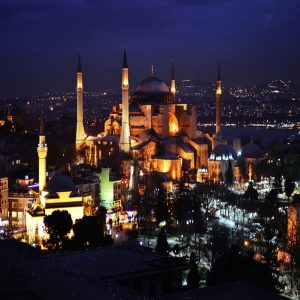
Itinerary
Morning: 8:30 AM – Early Arrival:
- Start early to avoid peak crowds
- Get your tickets if you haven’t purchased online
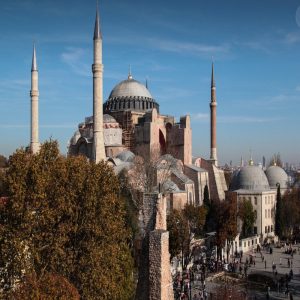
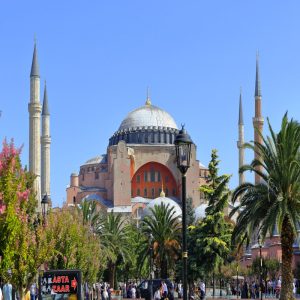
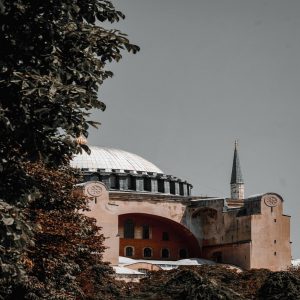
- Take initial photos of the exterior while the lighting is good
- Pick up an audio guide if desired
9:00 AM – Ground Floor Exploration:
- Enter through the Imperial Gate
- Admire the vast main dome and semi-domes
- See the Omphalion (coronation spot of Byzantine emperors)
- View the Deesis Mosaic, one of the finest Byzantine artworks
- Observe the unique blend of Islamic and Christian elements
- Study the massive marble columns and ornate capitals
11:00 AM – Upper Gallery (Requires climbing steps):
- Visit the marble door
- See the famous Viking graffiti
- View the Byzantine mosaics up close
- Observe the architectural details from above
- Take in the best views of the main dome
- Study the Empress Lodge
1:00 PM – Lunch Break:
- Try local cuisine at nearby restaurants
- Options include:
- Sultanahmet Köftecisi for traditional meatballs
- Seven Hills Restaurant for rooftop views
- Divella Bistro Restaurant for Turkish cuisine
2:30 PM – Afternoon Exploration:
- Return to examine details missed in morning
- Visit the Ablution Fountain
- See the Wishing Column
- Study the calligraphy displays
- View the Mihrab and Minbar
- Explore the side chapels and naves
4:30 PM – External Areas:
- Walk around the exterior gardens
- Visit the tombs of the Sultans
- See the remaining Byzantine structures
- Take late afternoon photos of the building
- Visit the museum shop
Evening: 6:00 PM – Surrounding Area:
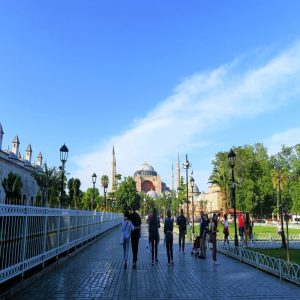
- Watch sunset with views of Hagia Sophia
- Take evening photos of the illuminated building
- Visit nearby Sultanahmet Square
- End with dinner at a local restaurant
Essential Tips:
- Dress modestly (shoulders and knees covered)
- Women should bring a headscarf
- Comfortable shoes are essential
- Photography is allowed (no flash)
- Floors can be uneven; watch your step
- Audio guides available in multiple languages
- Best to visit on weekdays
- Some areas may be under restoration
Historical Highlights to Note:
- Built in 537 AD under Emperor Justinian
- Served as a church for 916 years
- Was a mosque for 481 years
- Became a museum in 1935
- Returned to mosque status in 2020
Practical Information:
- No entry fee but donations accepted
- Closes during prayer times
- Carpeted areas require removal of shoes
- Accessible by tram (Sultanahmet stop)
- Located in historic Sultanahmet district
- Near other major attractions like Blue Mosque
Tour info
The Hagia Sophia, located in Istanbul, Turkey, is one of the most significant and iconic architectural wonders in the world, embodying centuries of religious, cultural, and political history. Originally built as a Byzantine cathedral in 537 AD under the orders of Emperor Justinian I, it was the largest church of the Eastern Roman Empire and served as the religious heart of Orthodox Christianity for nearly a thousand years. Designed by Isidore of Miletus and Anthemius of Tralles, its massive central dome, spanning 31 meters (102 feet) in diameter, was an engineering marvel of its time, appearing to float above a vast, light-filled interior adorned with intricate mosaics, marble columns, and grand arches. Following the Ottoman conquest of Constantinople in 1453, Sultan Mehmed II converted the Hagia Sophia into a mosque, adding minarets, a mihrab, and calligraphic medallions with Islamic inscriptions while preserving much of its Christian artistry. In 1935, under the secular reforms of Mustafa Kemal Atatürk, it was transformed into a museum, symbolizing Turkey’s cultural and religious diversity. However, in 2020, it was reconverted into a mosque, once again becoming an active place of worship while remaining open to visitors. Today, the Hagia Sophia stands as a magnificent fusion of Byzantine and Ottoman influences, attracting millions of visitors annually who marvel at its grandeur, historical significance, and the seamless blend of Christian and Islamic heritage within its sacred walls.